What Are College Harem Books?
College harem books drop a male MC into a university campus and let the environment do the heavy lifting. Dorm hallways, lecture halls, sorority houses, campus bars, study groups, house parties — the college setting is a proximity engine that puts the MC in constant contact with attractive women across every social layer. Unlike academy harem, which relies on magical schools and combat rankings, college harem stays grounded. The power dynamics come from social capital, academic performance, age gaps, and the raw energy of young adults living away from home for the first time.
The sub-genre works because college is inherently structured for escalation. The MC starts freshman orientation surrounded by strangers and ends the semester embedded in overlapping social circles. Each class, each party, each late-night study session is an opportunity for a new connection. And the confined campus geography means those connections keep colliding. The woman from his morning lecture is also his lab partner’s roommate, who also happens to be at the same bar on Friday night. The setting creates a web of relationships that feels organic rather than contrived.
College vs. Academy: What’s the Difference?
This is the most common question we get, and the answer matters because readers looking for one are often disappointed by the other. Academy harem books are fantasy: the MC attends a school for magic, combat, cultivation, or monster taming. The curriculum involves fighting. The women are warriors, mages, or supernatural creatures. The stakes are life and death, and the harem forms through shared danger and power dynamics rooted in magical ability.
College harem books are grounded. The MC attends a recognizable university. The curriculum involves actual classes — or at least the social scaffolding around them. The women are students, professors, TAs, sorority members, athletes. The stakes are social: reputation, grades, scholarships, jealousy, and the consequences of sleeping with your professor while her husband is the department chair. When the setting does include supernatural elements, they’re layered onto a realistic campus rather than replacing it.
The emotional register is different too. Academy harem leans into power fantasy through combat and magical rankings. College harem leans into social fantasy — the MC who can read every room, charm every woman, and navigate campus politics like a veteran because he either has preternatural charisma or, in second-chance stories, decades of life experience compressed into a teenage body. Both are wish-fulfillment. They just scratch different itches.
The Campus Setting Advantage
What makes the college campus such effective harem infrastructure is its density and diversity. Within a single setting you have freshmen, seniors, grad students, professors, coaches, counselors, and administrators — women at every age, experience level, and authority position. The MC doesn’t have to travel between cities or dimensions to encounter variety. He walks across the quad.
The social stratification is built in. Sororities create hierarchies. Academic departments create silos. Athletic teams create tribes. The MC who can cross those boundaries — the guy who’s welcome at the sorority formal and the engineering study group and the faculty mixer — becomes magnetically interesting to women from every circle. His harem isn’t just a collection of women who all like him; it’s a cross-section of the entire campus ecosystem, and each woman represents access to a different world.
The academic calendar provides natural pacing. Semesters create arcs. Midterms and finals create pressure points. Summer breaks create separation tension. And graduation creates the ultimate ticking clock — the harem has a built-in expiration date unless the MC does something to make it permanent.
Common College Harem Scenarios
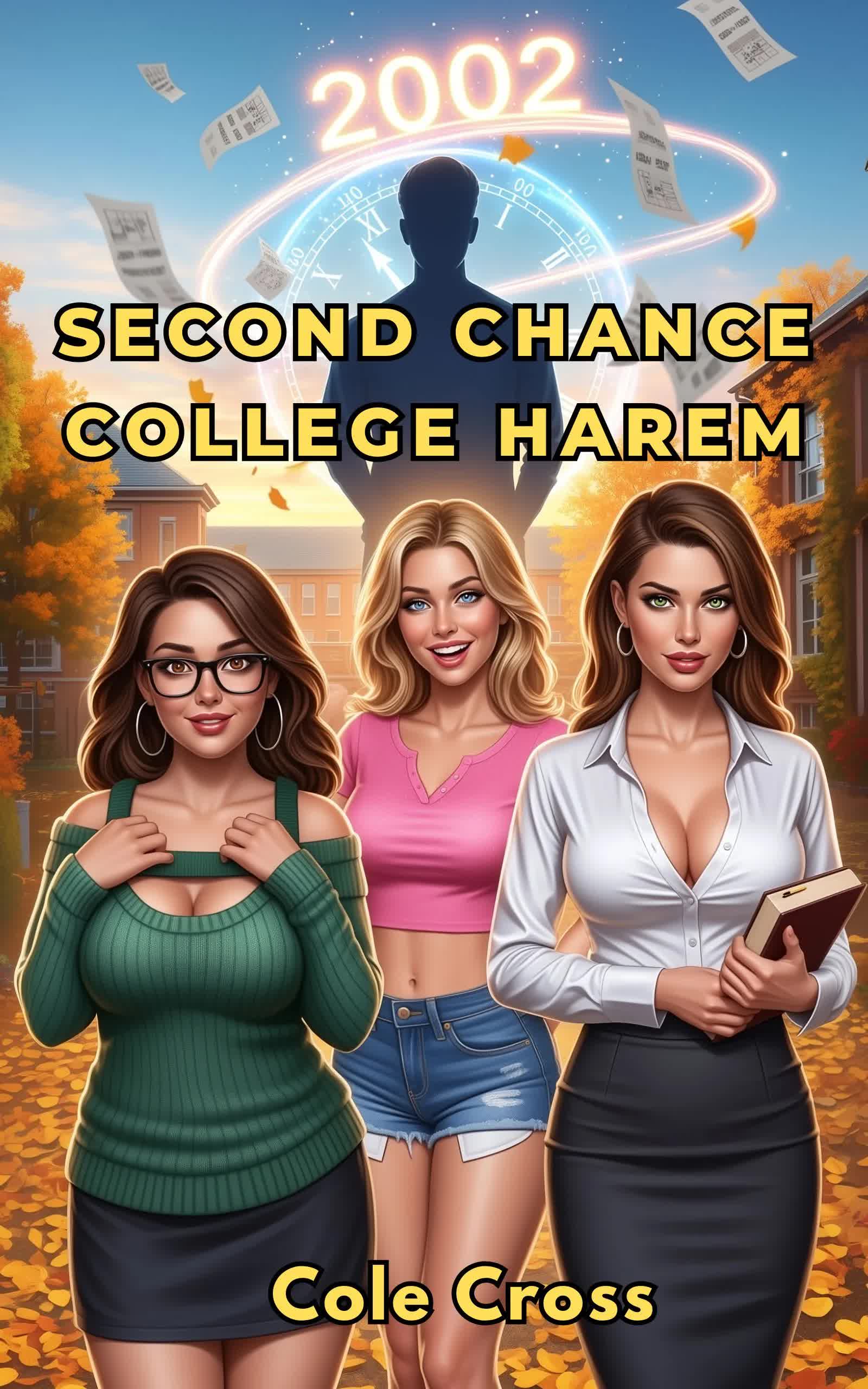
The time-travel second-chance premise has become the dominant framework, and Cole Cross’s Second Chance College Harem is the gold standard. The MC dies in middle age and wakes up at eighteen, back in his college dorm with decades of future knowledge. He knows which stocks to buy, which women he missed his shot with, and exactly how to navigate the social landscape he bungled the first time. The competence fantasy is irresistible: imagine reliving college knowing everything you know now.
The outsider arrival setup works differently. A transfer student, a scholarship kid from the wrong side of town, or a military veteran enrolling late — someone who doesn’t fit the campus mold and attracts attention precisely because of that. Cole Cross’s Loop’s End takes this to an extreme: a protagonist who has lived over three thousand years in a time loop arrives on campus with an OP skill set and the emotional scars of millennia of isolation. His competence is off the charts, but his ability to connect with people is genuinely damaged, and the women who break through that wall earn their place in the harem.
Other common scenarios include the fraternity or social club framework, where harem membership overlaps with organizational loyalty; the campus job setup, where the MC works as a tutor, campus security, or dorm RA and meets women through his professional role; and the athletic scholarship angle, where sports success generates social capital that attracts women from across campus.
The Professor/Student Dynamic
The age-gap tension between a student and his professor is one of the most electric dynamics in college harem, and it works because the power imbalance runs both ways. She controls his grade. He controls her composure. The forbidden nature of the relationship raises every encounter’s intensity, and the risk of discovery creates stakes that pure-romance scenes between peers can’t match.
Good college harem authors understand that the professor isn’t just an older woman — she’s a woman with something to lose. Her career, her reputation, her authority in the classroom. When she crosses that line with the MC, the sacrifice registers. It means more because she’s risking more. And the dynamic shifts permanently once they’ve crossed it — she can’t go back to being just his professor, and the tension of maintaining that pretense in public while being intimate in private creates layered scenes that single-status relationships don’t generate.
The best series in this space — including Second Chance College Harem — use the professor dynamic as the anchor relationship that gives the harem emotional weight. The coeds provide variety and energy. The professor provides depth and consequence.
What Separates Good College Harem From Bad
Bad college harem books treat the campus as wallpaper. The MC could be anywhere — swap the lecture hall for a tavern and the sorority house for a guild hall and nothing changes. The setting is cosmetic, and the women are interchangeable despite their supposedly different backgrounds. You see this in books where every woman reacts to the MC the same way, regardless of whether she’s a shy freshman or a tenured professor. The campus specificity that should make this sub-genre distinctive is completely absent.
Good college harem books make the setting load-bearing. The social dynamics of campus life create conflicts that couldn’t exist anywhere else. The MC’s relationships with different women create complications that are specifically collegiate — the ex-girlfriend who’s in his study group, the TA who graded his paper after they hooked up, the sorority president whose little sister is also interested. When the setting is doing real work, the harem feels like it grew out of the environment rather than being bolted onto it.
The other dividing line is whether the MC has an actual arc. The second-chance premise gives the MC knowledge, but the best versions still require him to grow. Knowing the future doesn’t mean knowing how to handle five simultaneous relationships. The competence that makes him attractive is the same thing that can make him arrogant, and watching him learn where his knowledge ends and genuine vulnerability begins is what separates a good college harem from a shallow power trip.
College Harem Book Reviews

Loop's End
The grind already happened. Three thousand years of it. Loop's End skips the boring part and drops you into the payoff -- an OP protagonist who earned every stat point through millennia of suffering, now building bonds with five distinct women who transform connection into real power.
Second Chance College Harem
Second Chance College Harem
Die at forty-one. Wake up at eighteen. This time you know every stock price, every sports upset, and every woman who got away. Second Chance College Harem is the competence-fantasy reboot every man has daydreamed about, executed with punchy prose and scorching heat.

Pledged To Him 12
His Sorority Harem
Jack collapsed on stage at graduation, and now he has to get himself together in time for a triple wedding that Delta Rho is throwing.

Pledged To Him 9
His Sorority Harem
Nine books in and Jack Avery is finally meeting the in-laws. The drunk mentor showing up first is just the appetizer.
Frequently Asked Questions
What are college harem books?
College harem books are a sub-genre of haremlit set on university and college campuses, where the male MC builds a harem amid dorm life, classes, sororities, and campus social dynamics. The setting provides natural proximity to multiple women, built-in social pressure, and a coming-of-age (or second-chance) framework that drives both the romance and the plot. These are written for male readers and feature a single male protagonist — not reverse harem.
How are college harem books different from academy harem?
Academy harem books typically use fantasy or supernatural schools — magical combat academies, cultivation sects, monster-girl institutes — where the curriculum involves fighting, spellcasting, or dungeon diving. College harem books are grounded in real-world or near-real-world university settings: lecture halls, dorms, sorority houses, campus bars. The power dynamics come from social status, academic competition, and age-gap tensions rather than magical rankings. Some series blur the line, but the core distinction is realism versus fantasy.
Are college harem books explicit?
Most college harem books land in the 3-5 range on our spice scale. The campus setting creates natural opportunities for intimate encounters — dorm rooms, study sessions that escalate, parties, professor office hours — and authors in this sub-genre rarely shy away from them. The college environment also enables age-gap dynamics (professor/student, TA/freshman) that carry their own heat. Our reviews include spice ratings on every title so you can calibrate to your preference.
What tropes are common in college harem books?
Common tropes include: time-travel second-chance premises where the MC relives college with adult knowledge, age-gap dynamics with professors or older women, sorority and fraternity social politics, roommate situations that escalate, campus queen bee rivalries, the scholarship student surrounded by wealthy elites, sports team dynamics, and study-group-to-harem pipelines. Many college harem series also incorporate mild progression elements like social stats or reputation systems.
Are these on Kindle Unlimited?
Yes. College harem books are widely available on Kindle Unlimited, and the sub-genre has been growing steadily on the platform. Most authors in this space publish exclusively through KDP Select, which means KU is the primary way to read them. Our reviews link directly to each title’s Amazon page so you can borrow instantly.