What Is Reverse Isekai Harem?
Standard isekai sends the MC to another world. Reverse isekai brings another world to the MC. One morning he’s a regular guy living a regular life, and by that afternoon there’s a demon princess in his living room, a lamia in his bathtub, and an elf warrior standing in his kitchen asking why his sword collection consists of a butter knife and a letter opener. The fantasy comes crashing into the mundane, and the MC’s job is to help these extraordinary women survive in his very ordinary world.
This is the fastest-growing sub-niche in all of haremlit right now, and the momentum isn’t slowing down. The appeal is instantly obvious the first time you read a scene where a 500-year-old dragon woman tries to figure out a self-checkout machine. The comedy writes itself, the romance emerges naturally from the guide-protector dynamic, and the modern setting means zero world-building exposition before the fun starts.
Why Reverse Isekai Is Eating the Harem Market
Two years ago, if you said "reverse isekai harem" to most haremlit readers, you’d get a blank stare. Now it’s one of the top three most-published sub-genres on Kindle Unlimited. The growth has been explosive, and there are concrete reasons for it.
The comedy floor is high. Even mediocre reverse isekai is funny, because the premise generates humor automatically. A supernatural being encountering a microwave, an escalator, or a pop-up ad for the first time is inherently entertaining. Authors don’t have to work as hard to create funny moments because the fish-out-of-water framework does the heavy lifting. This means the average quality of comedy in reverse isekai is higher than in any other harem sub-genre.
The MC gets to be the expert. In standard isekai, the MC is the fish out of water — the clueless newcomer being guided by locals. Reverse isekai flips that completely. The MC is the competent local who knows how everything works, and the women are the ones who need his help. This role reversal is powerful for male readers: instead of being the bumbling newcomer, you’re the knowledgeable guide whose mundane skills are genuinely impressive to your otherworldly companions. Knowing how to drive a car makes you more useful to a demon princess than any magic sword.
Zero world-building ramp-up. Isekai harem requires chapters of exposition to establish the fantasy world’s rules, geography, politics, and magic system. Reverse isekai skips all of that because the setting is Earth. Readers already know the rules. The story can start immediately with the inciting event — the portal opens, the women arrive, and the MC’s life gets interesting on page one. This faster start has proven to be a massive advantage in the KU market where readers make borrow-or-pass decisions based on the first few pages.
The Culture Clash: Where the Magic Happens
The heart of reverse isekai harem is the culture clash, and the best authors mine it for everything it’s worth. Fantasy characters who have never encountered modern technology, social norms, or consumer capitalism produce comedy gold in every scene.
Imagine a warrior woman from a medieval fantasy world encountering a gym for the first time. She understands the concept of training but is baffled by machines that simulate the physical labor she’s been doing naturally her entire life. "You lift this heavy thing... and then put it back down? Repeatedly? Without building anything?" The collision between her practical survival mindset and modern fitness culture is funny because it’s a genuine perspective clash, not a forced joke.
Or a succubus who’s been seducing men for centuries trying to navigate a modern dating app. She’s supernaturally attractive and magically persuasive — and none of that matters when the app reduces her to a profile photo and a 500-character bio. The indignity of a master seductress being ghosted after a text message is comedy that only reverse isekai can deliver.
The culture clash cuts both ways too. The MC’s mundane world contains wonders the fantasy characters never imagined. Hot running water. Refrigeration. The internet. Music that plays from a device that fits in your pocket. Watching a millennium-old elf discover ice cream for the first time and react like a child at Christmas creates warmth and sweetness that balances the comedy and the explicit content.
The Guide-Protector Dynamic
Reverse isekai creates a unique relationship dynamic that other harem setups don’t have. The MC isn’t the strongest, the most magical, or the most impressive person in the room. His harem members are objectively more powerful than he is — they’re dragons, demons, ancient warriors. But on Earth, his power is knowledge. He knows how the world works, and they don’t. He becomes their guide, their translator, their protector from a world that’s mundane to him but hostile and confusing to them.
This dynamic creates a romance framework where both parties need each other. The MC needs his harem members for supernatural protection (because whatever brought them to Earth usually brings trouble along too). The harem members need the MC for survival in a world they don’t understand. Mutual dependence builds genuine partnership rather than the one-sided worship that weaker harem fiction relies on.
The protector role also creates intimacy naturally. Teaching someone to use a kitchen, helping them shop for clothes that don’t involve medieval armor, explaining why they can’t just eat produce directly off the grocery store shelves — these are inherently intimate activities because they require patience, closeness, and the kind of personal attention that builds emotional bonds. By the time the MC and a harem member become romantic, they’ve already shared dozens of small, personal moments that make the progression feel earned.
Monster Girls Navigate Modern Life
Monster girl reverse isekai is the dominant variant, and for good reason: the visual and comedic contrast is irresistible. A lamia trying to sit in a normal chair. A centaur attempting to ride in a car. A fairy who gets mistaken for a drone. A kitsune whose multiple tails keep knocking things off shelves. The physical reality of non-human women in human spaces creates situational comedy that never gets old because every new location presents new challenges.
The monster girl element also forces the MC and his harem to deal with the practical question of hiding in plain sight. A woman with horns can wear a hat. Pointed ears can be covered by hair. But a seven-foot lamia with a serpent lower body? A harpy with full wings? An oni with bright red skin? These women can’t just blend in, and the creative solutions authors develop for public appearances range from glamour magic to absurd disguises to the MC simply restricting outings to very late at night.
The best reverse isekai series balance the comedy of public awkwardness with the genuine emotional weight of women who can’t fully participate in the world around them. A demon girl who can’t go to the park on a sunny day without terrifying children. A lamia who will never fit into a booth at the MC’s favorite restaurant. These limitations create vulnerability that deepens the MC’s protector role and adds poignancy to scenes that might otherwise be pure comedy.
Escalating Arrivals: The Reverse Isekai Growth Engine
Most reverse isekai harem series use an escalating arrival pattern. The first book introduces one or two fantasy women. The second adds more. By mid-series, the MC’s apartment (or house, if the author is merciful with the real estate) is a crowded commune of supernatural beings learning to coexist with each other and with Earth.
Each new arrival brings fresh comedy (another woman learning about modern life for the first time), fresh romance (a new personality and species to develop a relationship with), and fresh complications (more women means more hiding, more resources needed, and more inter-species friction within the harem). The escalation mirrors the harem growth in other sub-genres but with the added layer of logistical absurdity — at some point, feeding six supernatural women who each eat according to their species’ needs becomes its own adventure.
The arrival pattern also creates anticipation. Readers start speculating about who’s coming next. Will the next arrival be a dragon? A dark elf? A vampire? Each portal event becomes a reveal that fans look forward to, turning the new-harem-member announcement into a genuine reading event. Smart authors tease future arrivals to build excitement across books.
The Fastest-Growing Sub-Niche in Haremlit
Reverse isekai harem isn’t just growing — it’s reshaping the market. Authors who previously wrote standard isekai or LitRPG harem are pivoting to reverse isekai because the reader demand is there and the format is more accessible. The barrier to entry is lower for new readers (no fantasy world to learn), the comedy appeal is broader, and the slice-of-life elements attract readers who might bounce off dungeon-crawling or stat-heavy LitRPG.
If you haven’t tried reverse isekai harem yet, this is the best time to start. The sub-genre is mature enough to have genuinely great series but young enough that you can read most of the top-tier titles in a few weeks. The quality ceiling keeps rising as more talented authors enter the space, and the variety of approaches — comedy-focused, action-focused, romance-focused, horror-tinted — means there’s a reverse isekai flavor for every taste.
Reverse Isekai Harem Book Reviews
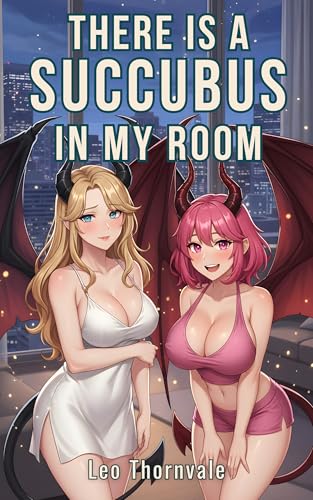
There Is a Succubus in My Room
Earthbound Succubus Harem
A succubus collapses on Jake's floor. She is starving, confused, and has no idea why she is on Earth. He feeds her. Then a second one crashes onto his balcony. She does not understand clothing. Or shame. His lease definitely does not cover this.
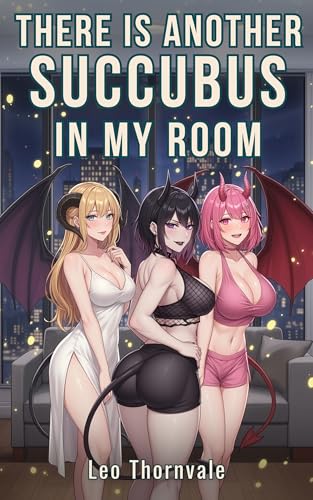
There Is Another Succubus in My Room
Earthbound Succubus Harem
Raven crashed through his window at 3 AM, bleeding and snarling, with obsidian horns and violet eyes that promised violence. Then she collapsed. Then he realized she was starving.
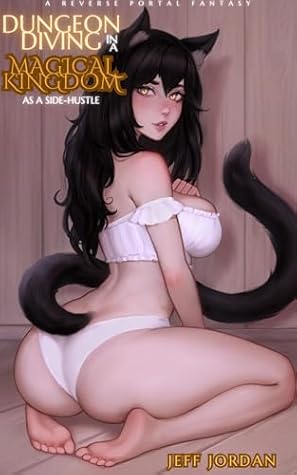
Dungeon Diving in a Magical Kingdom as a Side-Hustle
Dungeon Diving in a Magical Kingdom as a Side-Hustle
A roofer stumbles on a magic bracelet and starts commuting between Earth and a fantasy kingdom full of monster girls and dungeon crawls.
Frequently Asked Questions
What is reverse isekai harem?
Reverse isekai harem flips the classic isekai premise. Instead of the MC being transported to a fantasy world, fantasy characters are transported to Earth. Monster girls, demon princesses, elf warriors, and other supernatural women arrive in the MC’s modern world and must adapt to normal life while he helps them navigate it. The MC stays in his familiar environment while his harem comes to him from other dimensions, creating fish-out-of-water comedy and culture-clash romance. It’s the fastest-growing sub-niche in haremlit.
What is the difference between reverse isekai and regular isekai harem?
In regular isekai harem, the MC leaves Earth for a fantasy world. In reverse isekai harem, fantasy characters come to Earth. The key difference is the setting: reverse isekai takes place in the modern world, which means familiar locations, modern technology, and real-world social dynamics. The comedy comes from supernatural beings trying to understand mundane human life. Regular isekai relies on the MC discovering a new world; reverse isekai relies on fantasy characters discovering our world. Both deliver harem romance, but the tone and humor are fundamentally different.
Are reverse isekai harem books on Kindle Unlimited?
Yes, reverse isekai harem has exploded on Kindle Unlimited over the past two years. What was once a niche within a niche is now one of the most actively published sub-genres of haremlit. New reverse isekai harem series launch on KU almost weekly, and established series are releasing sequels at a rapid pace. The sub-genre’s growth has been driven by reader demand for comedy-focused harem that doesn’t require complex world-building. Our reviews track the best reverse isekai titles as they release.
Why is reverse isekai harem so popular right now?
Reverse isekai harem combines the two things haremlit readers love most: monster girls and comedy. The fish-out-of-water format generates humor effortlessly — a succubus trying to use a smartphone, a dragon girl confused by traffic lights, an elf struggling with door handles. The modern setting is instantly relatable, requiring no world-building exposition. And the MC gets to be the expert and guide, which is a satisfying role reversal from isekai where he’s always the clueless newcomer. The format also naturally supports slice-of-life pacing, which has been trending across all of haremlit.
What tropes are common in reverse isekai harem books?
Common tropes include: fish-out-of-water comedy with fantasy characters in modern settings, culture-clash romance where the MC teaches supernatural women about Earth, cohabitation and domestic comedy (the MC’s apartment becomes a crowded harem house), monster girls navigating human social norms, government or secret organization involvement in managing the isekai arrivals, the MC protecting his harem from both mundane and supernatural threats, and escalating arrivals where more women from the other world keep showing up. Many reverse isekai series blend comedy with action when threats from the original fantasy world follow the women to Earth.