What Are Elf Harem Books?
Elf harem books drop a male MC into the orbit of elven women — beings who are supernaturally beautiful, centuries old, magically powerful, and almost universally convinced that humans aren’t worth their time. That last part is what makes the genre work. Every elf in the MC’s harem had to overcome cultural prejudice, personal pride, or both to be there. The relationships aren’t handed to him. They’re earned through proving that a human with a mortal lifespan can match the worth of an immortal being.
The genre pulls from classic high fantasy — Tolkien built the template that every elf harem author either follows or subverts. Pointed ears, ageless beauty, magical affinity, forest kingdoms, ancient languages, and a vaguely condescending attitude toward shorter-lived races. Where haremlit adds its own spin is in the intimacy. Elves who have waited centuries for a partner don’t do casual. When an elf commits to the MC, the intensity of that commitment drives some of the most emotionally charged scenes in the genre. The explicit content hits differently when both parties know this choice has consequences that will echo for millennia.
High Elves, Dark Elves, and Wood Elves: The Elf Subtypes of Harem Fiction
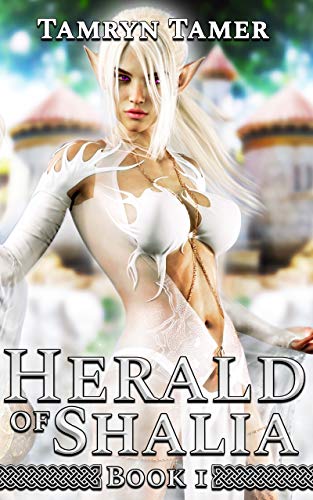
High elves are the aristocrats — pale, elegant, magically gifted, and painfully aware of their superiority. In harem fiction, the high elf is the ice queen archetype. She looks down on the MC initially, views his human nature as a disqualification, and only warms to him after he demonstrates something that shatters her assumptions. High elf romance is slow burn by design, and the payoff is proportional to the wait. When the most composed, dignified woman in the room finally breaks her own rules for the MC, it’s a moment that justifies entire volumes of buildup.
Dark elves flip the script. Underground-dwelling, morally flexible, and culturally liberated compared to their surface cousins, dark elves in harem fiction tend to be direct about desire. They don’t hide behind formality or tradition. If a dark elf wants the MC, she’ll tell him — usually while doing something dangerous that makes the declaration even more charged. Dark elf series tend to be more explicitly heated from the start and often feature matriarchal societies where the MC is valued as a rare male outsider with unique traits. The cultural inversion — the MC being the pursued rather than the pursuer — gives dark elf harem a different energy than high elf romance.
Wood elves occupy the middle ground — connected to nature, physically agile, less politically rigid than high elves but more traditional than dark elves. They’re the ranger archetype translated into a love interest: capable, self-reliant, and bonded to forests and beasts. Wood elf romance in harem fiction often involves the MC proving himself in wilderness survival, earning the respect of a community that values harmony with nature above magical power or political standing. The appeal is earthier and more grounded than either high or dark elf romance.
The best elf harem series don’t pick just one type. They mix. A harem with a haughty high elf princess, a fiercely direct dark elf warrior, and a quietly devoted wood elf healer creates natural interpersonal dynamics that write themselves. Each elf brings different cultural values, different attitudes toward the MC’s humanity, and different styles of affection. The interplay between subtypes is where the real entertainment lives.
The Forbidden Romance That Drives Elf Harem Fiction
Almost every elf harem book runs on the same fundamental tension: elves think humans are beneath them, and the MC proves them wrong one relationship at a time. This isn’t just flavor text — it’s the engine of the entire genre. Each elf who joins the harem is making a choice that her society condemns. She’s choosing a partner who will age and die in what feels like a heartbeat by elven standards. She’s breaking traditions that have held for thousands of years. And she’s doing it because the MC offers something no elven suitor ever could — passion, urgency, the intensity that comes from knowing time is finite.
The lifespan gap is the emotional core that separates elf harem from other monster girl sub-genres. A succubus lives until she’s killed. A catgirl has a human-adjacent lifespan. But an elf will live for a thousand years after the MC dies of old age, and both of them know it from the first kiss. Authors handle this in different ways — some give the MC extended life through leveling, magical bonds, or divine intervention; others lean into the bittersweet reality and use it to heighten every moment together. Either approach works, but the awareness of mortality hanging over an immortal love story adds emotional weight that pure fantasy romance rarely achieves.
Cultural clash provides the external conflict. The MC’s human directness versus elven formality. His short-term thinking versus their millennia-scale planning. His casual attitude toward danger versus their calculated risk assessment. These differences create friction that feels organic rather than manufactured, and watching both sides adapt — the MC learning elven patience, the elves learning human boldness — is a character development engine that sustains entire series.
Elf Harem Book Reviews
Frequently Asked Questions
What are elf harem books?
Elf harem books feature elven women as the MC's primary love interests. Elves in haremlit carry the classic fantasy traits — long-lived or immortal, supernaturally beautiful, magically gifted, and often culturally isolated from humans. The MC typically enters their world as an outsider (through isekai, adventuring, or diplomacy) and earns the attention of multiple elven women through strength, unique abilities, or being the first human they have encountered in centuries. Elf harem fiction tends to be more romance-forward than pure action, with themes of cultural clash, forbidden relationships, and the tension between elven tradition and genuine desire.
What types of elves appear in harem fiction?
The main elf subtypes in harem fiction are high elves (aristocratic, magically powerful, often arrogant toward humans), dark elves (underground-dwelling, morally ambiguous, frequently portrayed as more sexually forward), wood elves (nature-bonded, ranger archetypes, physically agile), and half-elves (caught between two worlds, often the MC's first elven love interest). Some series add unique variants like sun elves, moon elves, or blood elves. The best elf harem series use multiple subtypes in the same harem, creating inter-species dynamics where a high elf princess and a dark elf warrior have to coexist under the MC's roof.
Are elf harem books explicit?
Elf harem books range from moderately explicit (spice 3) to fully explicit (spice 5) on our rating scale. The genre tends toward a slower burn than succubus or demon girl harem — elven culture is often portrayed as reserved or formal, so intimate scenes feel like genuine milestones in the relationship rather than immediate payoff. Dark elf series tend to be more explicit earlier, as the dark elf archetype is typically more sexually aggressive. Our reviews rate each book individually so you can match your preferred heat level.
What is the forbidden romance angle in elf harem fiction?
Most elf harem fiction uses forbidden romance as a core tension driver. Elven societies in these books typically view humans as inferior — short-lived, magically weak, and culturally primitive. An elf woman choosing a human partner scandalizes her community, creates political complications, and forces her to choose between her people and her feelings. This dynamic gives every relationship real stakes. The MC isn't just winning hearts; he's breaking cultural taboos, and each elf who joins his harem does so at personal cost. That sacrifice makes the relationships feel meaningful rather than disposable.
How do elf harem books handle the lifespan difference?
The human-elf lifespan gap is one of the most interesting tension points in elf harem fiction. Elves live for centuries or millennia; humans get maybe eighty years. Authors handle this in several ways: the MC gains extended life through magic, leveling, or a bond with his elven partners; the story embraces the bittersweet reality and uses it for emotional weight; or the MC is transported to a world where the rules are different. The lifespan question also explains why elves are reluctant to bond with humans — falling in love with someone who will age and die in what feels like a blink is a legitimate fear that gives elven characters emotional depth beyond "pretty woman with pointy ears."