What Are Lamia and Naga Harem Books?
Lamia and naga harem books feature serpentine monster girls — women with human upper bodies and snake-like lower halves. Lamias draw from Greek mythology (the cursed queen Lamia), while nagas come from Hindu and Buddhist traditions (divine or semi-divine serpent beings). In haremlit, both terms describe essentially the same character type: a beautiful woman whose snake body coils, constricts, and moves in ways that create unique romantic and combat dynamics.
Snake-woman characters occupy a specific niche in monster girl fiction. They're more alien than catgirls or elves but more humanoid than slimes or arachne. The coiling mechanic — wrapping around a partner during intimacy or combat — is the defining physical trait that authors build scenes around. Combined with cold-blooded temperature mechanics (seeking body heat from warm-blooded partners), forked tongues, and hypnotic gazes, lamias and nagas offer a distinct sensory experience that other monster girl types don't replicate.
Lamia vs. Naga: What's the Difference?
The mythological difference is origin: lamias are Greek, nagas are South/Southeast Asian. In practice, most haremlit authors use the terms interchangeably or pick whichever sounds better for their world. Some authors make a mechanical distinction — lamias as more bestial or curse-afflicted, nagas as more regal or divine — but this isn't standardized. If you enjoy one, you'll almost certainly enjoy the other. Our reviews tag both so you can find what you want regardless of which term an author chose.
Why Lamia and Naga Fans Are So Loyal
The coil. That's the real answer. A powerful, beautiful snake-woman wrapping herself around the MC is the fantasy that drives this entire sub-genre, and it delivers in both combat scenes and intimate ones. The physical uniqueness is something no other monster girl type can replicate — cold-blooded body seeking warm-blooded heat, constricting embrace, forked tongue. Beyond the physical, serpentine heroines tend to be proud, ancient, and intensely possessive. A lamia who views the MC as her territory first and her partner second creates relationship tension that writes itself, especially when she has to learn to share him with other harem members.
Lamia & Naga Harem Book Reviews
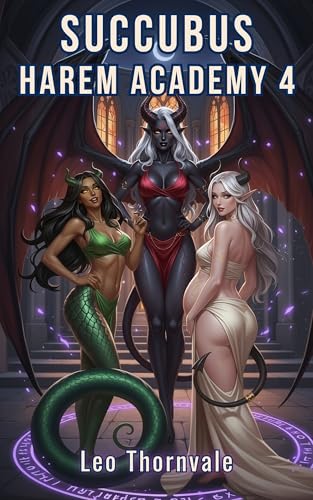
Succubus Harem Academy 4
Succubus Harem Academy
Three lost realms. A lamia who has never met a human. An ancient goddess finally admitting she is afraid to love. The honeymoon is more dangerous than the war.
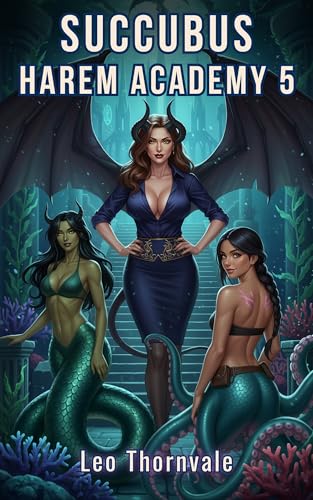
Succubus Harem Academy 5
Succubus Harem Academy
Nine Soulmate bonds, a sinking ocean academy, and a tentacled cecaelia who lights up in the dark when she is turned on — Succubus Harem Academy goes full deep-sea.
Frequently Asked Questions
What are lamia and naga harem books?
Lamia and naga harem books feature serpentine monster girls — women with human upper bodies and snake-like lower halves. The lamia originates from Greek mythology (the cursed queen Lamia) and the naga from Hindu and Buddhist traditions (semi-divine serpent beings). In haremlit, both types appear as beautiful, powerful women whose serpentine bodies create unique romantic and combat dynamics — coiling, constricting, temperature-seeking, and hypnotic abilities that set them apart from other monster girl archetypes.
What is the difference between a lamia and a naga?
Mythologically, lamias are Greek and nagas are South/Southeast Asian. In haremlit, most authors use the terms interchangeably or choose whichever fits their world-building. When authors do distinguish them, lamias tend to be portrayed as more bestial or cursed, while nagas are often more regal, ancient, or divine. Both feature the defining trait of a snake-bodied woman with a human upper half. For finding books, searching either term will lead you to serpentine monster girl harem fiction.
Are lamia harem books explicit?
Lamia and naga harem books typically include explicit content, rating 3-5 on our spice scale. The serpentine body type creates unique intimate dynamics that authors explore in detail — coiling, temperature contrast (cold-blooded snake body seeking warm-blooded human heat), and constriction mechanics. Because serpentine heroines are one of the more "exotic" monster girl types, series featuring them tend to lean into the physical differences rather than glossing over them, resulting in distinctive scenes you won't find in other sub-genres.