Who This Book Is For
Readers who enjoyed Denver Fury and want to see the series improve in pacing and character depth
Who This Book Is NOT For
Those who bounced off the first book's prose quality or formulaic structure
Our Review
The Setup
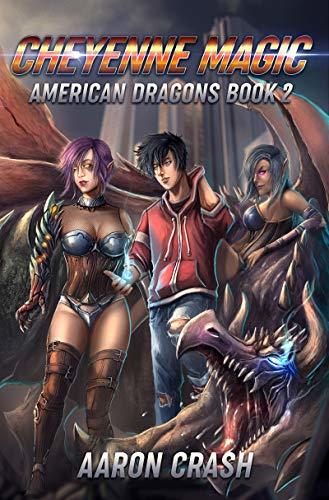
The second installment of American Dragons continues Steven’s journey as a Dragonsoul navigating the hidden magical world. Set against the backdrop of Cheyenne, the stakes escalate as old feuds and ancient forces close in. His growing powers are tested against threats that actually require effort to overcome, and his relationships with his shapeshifting companions deepen from initial attraction into something with real emotional weight.
If Denver Fury was the explosive origin story, Cheyenne Magic is where the series starts to mature. The world gets bigger, the threats get more personal, and the harem dynamics evolve beyond first impressions.
What Works
The pacing is noticeably improved over Denver Fury. Crash seems to have found his rhythm by the second book, balancing action sequences, character development, and intimate scenes more effectively. The story breathes where it needs to and accelerates when the plot demands it, which was not always the case in the first installment.
The relationships are the biggest upgrade. Where Denver Fury sometimes rushed through bonding to get to the next action beat, Cheyenne Magic allows the harem dynamics to develop naturally. The women feel more like partners in an evolving relationship than conquests on a checklist. Their interactions with each other, not just with Steven, add social depth to the group and make the harem feel like an actual community rather than a collection of individual pairings.
The action sequences are praised as exciting and well-choreographed. The escalation of threats forces Steven to use his powers more creatively, and the fight scenes benefit from the additional world-building that expands the dragon-shifter mythology.
What Doesn’t
The formulaic structure remains. If you map out the beats of Cheyenne Magic against Denver Fury, the skeleton is largely the same: new location, new threat, power escalation, new or deepened romantic connection, climactic battle. For readers who enjoy comfortable genre structures, this is fine. For those hoping the series would break new ground in its second outing, the predictability may disappoint.
The writing quality, while improved, still has rough edges. Dialogue attribution issues crop up in group scenes, and some magical mechanics remain under-explained. Crash has good ideas about how dragon magic should work, but the execution leaves gaps that more detail-oriented readers will notice.
The Heat
Same 4 as Denver Fury. The intimate scenes benefit from the deeper relationships, with encounters that feel more emotionally connected than the first book’s sometimes-rushed moments. The spice remains explicit and frequent, and the shapeshifter element continues to provide variety. The improved pacing means the heat scenes are better integrated into the narrative flow rather than feeling like scheduled breaks from the action.
Bottom Line
Cheyenne Magic is the book that proves American Dragons is a series worth continuing. The improvements over Denver Fury are meaningful across the board: better pacing, deeper relationships, and more satisfying action. If you finished the first book thinking “this could be good if it tightened up,” Cheyenne Magic is the payoff. Recommended for urban fantasy harem readers already invested in the series, and a sign that Crash is growing as an author alongside his protagonist.
Keep Reading
- Browse all harem books by sub-genre
- Best harem books of 2026 — ranked by our editors
- All harem books on Kindle Unlimited
If You Liked This, Try
Direct predecessor in the American Dragons series
Dragon-themed harem sequel with escalating power and romance
Second installment that improves on the first with deeper world-building
The Verdict
Cheyenne Magic is the better book in the American Dragons series. The pacing improves, the relationships deepen, and the action sequences hit harder. The formulaic structure and writing rough edges persist, but this is Crash leveling up alongside his MC.